 Tensor Exports
Export material guide
Non-woven fabrics for converters
A non-woven fabric starts as a web of fibres or filaments. How that web is formed and bonded changes its strength, absorbency and handle. Start with the job the fabric needs to do.
Compare catalogue samples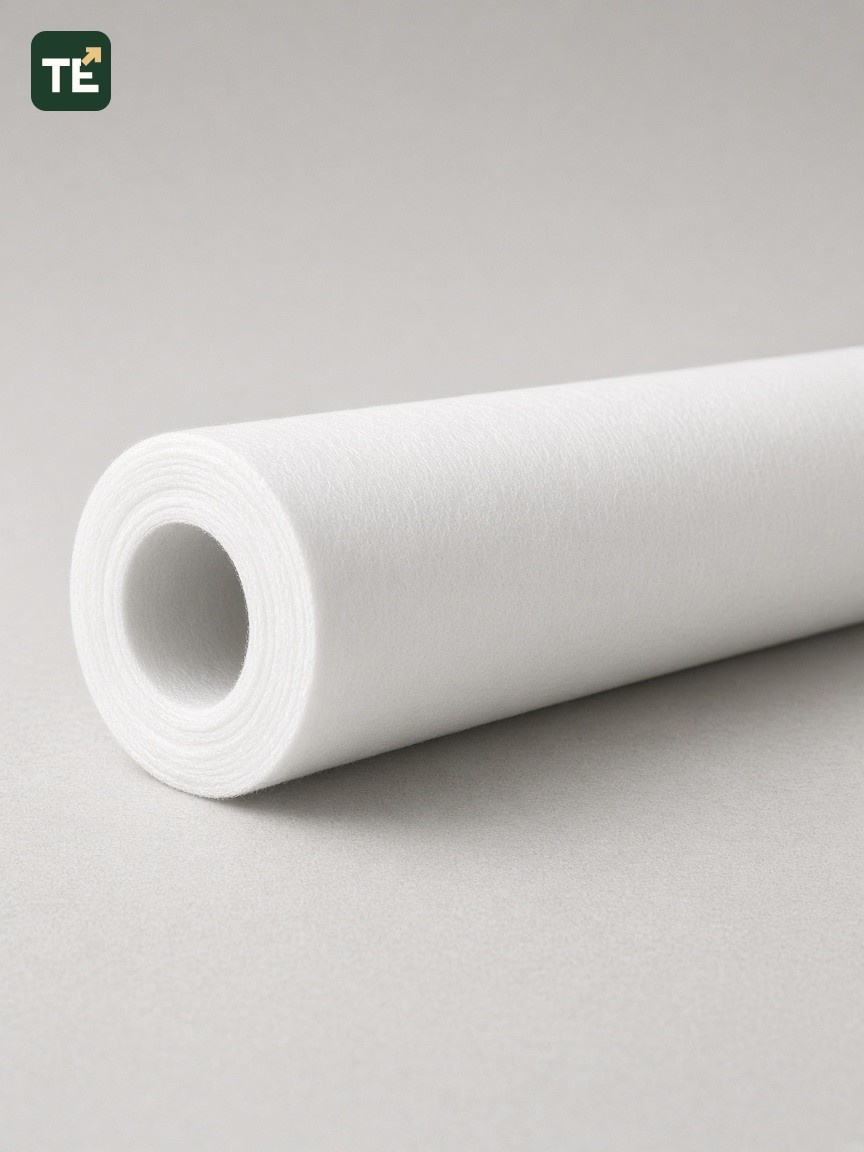
Spunbond for roll conversion
In polypropylene spunbond production, molten polymer is spun into continuous filaments, laid into a web and bonded, often with heated patterned rollers. For packaging or protective layers, compare basis weight, tear behaviour, slit width and winding tension.
Spunlace for wiping
Spunlace uses fine, high-pressure water jets to entangle fibres. A viscose-rich blend can give a soft, absorbent sheet. Ask for a trial cutting to check wet strength, lint and liquid uptake against the surface you intend to clean.
Developing a sample with suppliers
Share the application, fibre blend, target GSM, colour and converting method. We use those details with our premium suppliers to select a trial material. Agree the roll core, cut dimensions, pack count and carton markings before the bulk quotation.
From roll stock to finished product
See how sofa makers close an upholstery frame, how cushion makers contain loose fill and how converters turn rolls into bags and wipes.
View the illustrated applications guide →